Table Of Content

Palm adds that in severe cases, your doctor might prescribe antibiotics to prevent an infection from arising. Remember, if you have a deep ingrown hair that just isn't going away, see your dermatologist. In some cases, they might use laser hair removal to remove your ingrown hair. Technology in this area has come a long way, and doctors today have access to lasers that can treat all skin types.
What medications are used to treat ingrown hair?
Man, 36, left ‘brain dead’ with 4% chance of survival after trying to pull out an ingrown hair in his gro... - The Sun
Man, 36, left ‘brain dead’ with 4% chance of survival after trying to pull out an ingrown hair in his gro....
Posted: Thu, 21 Mar 2024 07:00:00 GMT [source]
By removing that top layer of excessive dead skin cells, we lessen the chances of clogging our pores and trapping our hair. Where you get them may help evaluate what's triggering your ingrown. If the ingrown is stubborn, as many tend to be, try a chemical exfoliator containing lactic acid or glycolic acid to the hair. "These acids help break down the congested hair follicle,” says Dr. Charles.

Soothe ingrown hair and razor bumps.
"It teases out any stubborn ingrown hairs prior to shaving," she says. Ingrown hair cysts occur when a hair follicle gets blocked and the hair grows into your skin instead of outward. You should never pop an ingrown hair cyst because it can cause infection and scarring. They may go away on their own, but if they hurt, become red, or ooze pus, see a healthcare provider. Salicylic acid is widely used in skincare products for its ability to treat acne. It has been found to reduce redness and inflammation in addition to serving as a chemical exfoliant.
Rifle Paper Co. + Venus Deluxe Smooth Sensitive Razor
What you probably don't want to do is remove the deep ingrown hair yourself. This puts you at risk of damaging your skin or causing an infection, which often isn't worth the risk considering that a large percentage of ingrown hairs go away on their own. Your physician might suggest you apply a warm compress to the ingrown hair or hit pause on removing hairs from that area, while some dermatologists might suggest applying apple cider vinegar to the ingrown hair. This can help because apple cider vinegar contains anti-inflammatory properties that help soothe irritated skin, Engelman says.
Contact your healthcare provider if you notice any signs of infection. In women, the most common areas where ingrowns can develop are the armpits, the pubic area, and on the legs. You can relieve an ingrown hair under the skin by reducing the risk of an infection in the area and by using exfoliation to relieve any discomfort or pain. Depending on the severity of your ingrown hair, you may need to apply a leave-on product like a scalp serum. Nathan recommends looking for products containing zinc, which can soothe irritation.
Medical Professionals
Any information published on this website or by this brand is not intended as a substitute for medical advice, and you should not take any action before consulting with a healthcare professional. After every shave, make sure to sanitize your blades with rubbing alcohol and warm or hot water. If your razor looks rusty and you’ve been using it for a while, toss it out. "Replace old blades—ones you’ve used for more than five to seven shaves," says Dr. Engelman. It’s important to always hydrate and moisturize after shaving.
Aspirin-Honey Treatment
Ingrowns, however, can also be the result of repeated wear on a particular area—no matter the hair type. So if you find you get them regularly, and curly hair isn't the explanation, you may need to inspect whether the area is going through repeated irritation like chafing from clothing, masks, sweaty materials, or so on. SELF does not provide medical advice, diagnosis, or treatment.
Medical Treatment
There are things you can do to treat and prevent them and in most cases you will not need to a see a GP for treatment. If you’ve struggled with ingrown hairs in the past and are wondering how to get rid of ingrown hair scars, here are eight secrets on how to get rid of scars. If you have an ingrown hair on your leg, face or anywhere else, I’m sure you want it gone fast. For a severe infection, they can prescribe medication to treat it and coax the hair out.
Preventing Ingrown Hairs
In order to treat ingrown hairs, Hayag says it's best to soak a washcloth with tea tree oil diluted with warm water and place the washcloth on the affected area like a compress. To make a tea tree oil soak, combine 10 drops of tea tree oil with 4 to 6 ounces of water. No matter your hair removal method, exfoliating regularly is a surefire way to help prevent dead skin cells from blocking the hair follicles, says Dr. Icecreamwala.
Wearing clothing like this over an area where you have an ingrown hair can only make the situation worse. So, opt for loose fitting, cotton clothing that won’t rub against the problem area. Simply apply a drop or two of pure tea tree oil to ingrown hairs once a day to discourage infection and inflammation while promoting healing. To reduce the inflammation of an ingrown hair, you can apply ice or a cold compress.
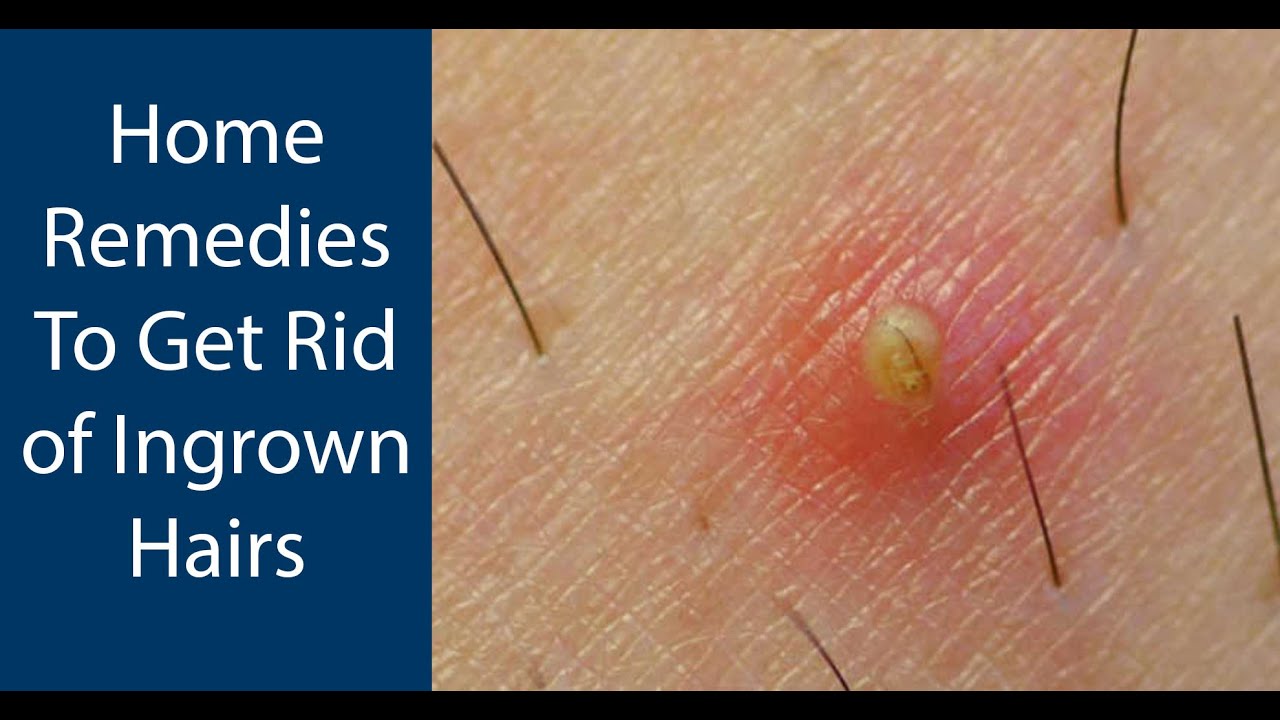
Hair removal is the root cause of ingrown hairs, since they occur when hair starts to grow back and curves to burrow into the skin. Shaving is a big culprit because pulling on your skin as the razor glides can draw hair back into the skin, and shaving also gives hair strands a sharp edge that makes piercing the skin easier. Ingrown hairs frequently go away on their own without any specific treatment. There’s a chance an ingrown hair could heal on its own in as quickly as a week or two, Dr. Hayag says, but it may take longer if it gets infected. Sometimes it takes around a month, according to the Mayo Clinic, but it can take up to six months for hairs that are really stuck in there. (Sorry to be a downer.) If you have pain, the bump gets bigger, and/or you notice other signs of infection (see below) and your symptoms don’t get better in a few days, you’ll want to get that sucker out.
If you shave often, you’re more likely to have ingrown hairs. You may be inclined to cover your scalp with a hat if an ingrown hair develops there, but it could make things worse. Nathan explains that friction and occlusion from tight hats or helmets may contribute to ingrown hairs by preventing the hair from emerging from the skin.
If you’re aiming for a smooth, hair-free look, ingrown hairs can ruin the effect. These unsightly bumps can be an annoying side effect of hair removal. The good news is ingrown hairs can be treated effectively at home. “It cuts your hair at skin level, meaning there are fewer chances of hair regrowth getting trapped below the surface of the skin,” she tells Bustle. No, you should not try to pop or squeeze the affected area because not only can this damage your skin, but it can also result in an infection. If bacteria or other pathogens enter the skin, an infection can develop, leading to a painful bump.



No comments:
Post a Comment